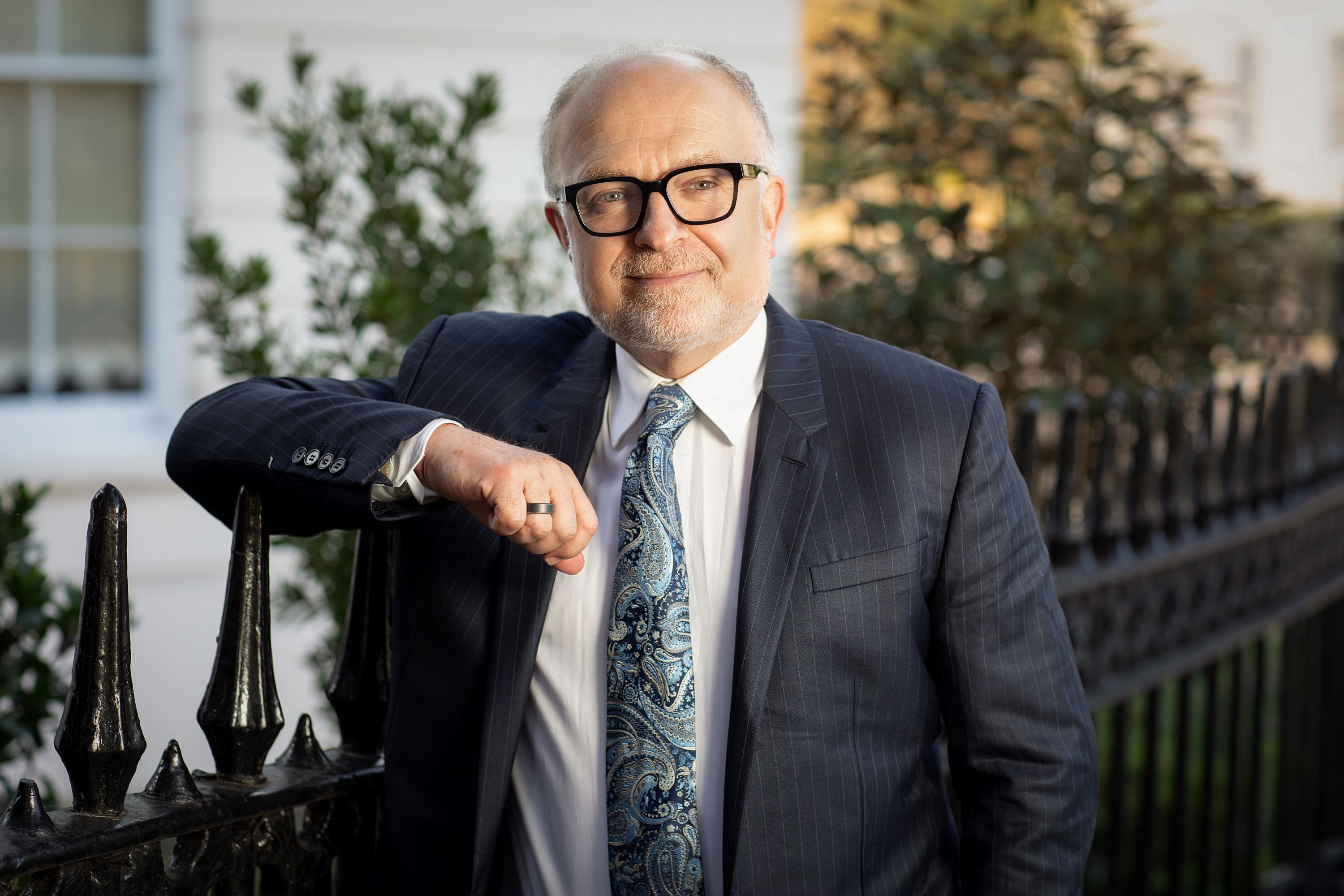
Ahead of his new book launch, we spoke to Andrew J Scott, Professor of Economics at London Business School, Research Fellow at the Centre for Economic Policy Research and a co-founder of The Longevity Forum, to understand his theories on how we can build a better society for an ageing population.
You’re gearing up to the launch of your new book ‘The Longevity Imperative: Building a Better Society for Healthier, Longer Lives’. What was your inspiration behind writing this book?
Writing a book is a big commitment, so inspiration and motivation were definitely needed. For me, there are probably three separate motivations for this book. The first is to correct what I think is a major error in individual and public debate. We talk a lot about an ageing society and the rising number of older people, which is invariably couched as a problem focusing on end-of-life and decline. I believe this ignores the true issue that we face, which is not that there are more older people but that, regardless of your age, you can expect to live longer than past generations. We must act differently and ensure that those lives aren’t just longer but are healthier and productive for longer. This is an exciting opportunity but also a radical change – we must change how we age and that literally changes everything.
The second motivation for the book is my belief that we must elevate this longevity agenda to be up there with AI and climate change as a key force that we need to adapt and adjust to, ensure a prosperous future. If we don’t, then we will be ill prepared for living to older ages and will experience the negative outcomes that so many fear.
The third motivation is more personal. Longevity is a topic I find endlessly fascinating and that covers so many different dimensions and disciplines. There are lots of great books out there on different aspects of ageing and longevity, but I wanted to try and write a single book that weaved all these themes together in a coherent big picture way.
Like us, you are on a mission to redefine people’s concept of ageing. Rather than see an ageing population as a burden, you believe longer lives should be a source of hope and fulfilment. What would your advice be to anyone entering their retirement years?
Many people are working for longer and don’t want to retire, others want to move to more flexible working and perhaps part-time, whilst others are keen to shift to more socially purposeful activities, spend time with their family or just do their own thing. And, of course, not everyone has a choice. So, there is enormous variety in what people want to do and what they can do. Given this, I try not to be too prescriptive, but I think there are some words of advice that are useful across a broad range of circumstances. The first is to remember that how we age is malleable. There are steps that you can take that improve your chances of ageing well and the quality of your retirement will be marked by whether you take those measures. It’s also never too late to start taking those actions.
Keeping active, maintaining friendships, finding new ones, trying to mix with people of different ages, doing new things as well as familiar ones and of course minding your health through exercise and diet are all key. None of this is revolutionary but what has changed is how long you are likely to live for and how much you therefore need to invest in your own future. The other advice is that as more and more people are living for longer, we are having to find new ways of occupying our time and finding out what to do. Don’t expect institutions and social norms to necessarily support you in doing that. You are going to have to sort some of these things out yourself.
We need to address society’s views of the ageing population and change what can be rather negative stereotypes. How do you believe we can start this revolution?
This is a key issue. One thing that tends to emerge from analysis is that the more people who live to older ages means the more negative society gets about older people. That’s quite the conundrum. The problem is that gains to life expectancy now mean that the young and middle aged are more likely to become old than not. That has never been the case before. The young can now expect to become the old. But that requires thinking of our future very differently and recognising that ageing is a process not an event. Ageing happens over our entire life, not when we hit 65. It is literally one thing that unites us all, regardless of our age.
I think we have also tended to medicalise old age and define it purely in terms of declining health. We must recognise that not everything declines with age – for instance older people tend to be happier than middle-aged people. Some of these cultural assumptions about old age are long lasting and reflect a time when very few people became old. Other parts of our culture are more recent, especially the medicalisation of old age.
As the world’s leading expert on the economics of longevity, you talk about how an ageing society will require a transformation of our health systems, the financial sector and overall economy. For those of us who aren’t experts in economics, could you explain the challenges that an ageing population can bring?
The standard take in economics is that old age is a time when people are in poor health and are unproductive (in terms of GDP, although often implicitly more broadly). An ageing society refers to the fact that due to declining birth rates and growing life expectancy we have more of the population in these older ages and so we will see declining GDP growth, rising health costs and major problems for government finances. The take in my book is that this arises from a failure to adjust to longer lives. We need to revamp the health system so it doesn’t focus on treating you when you become ill with a disease but by keeping you healthy for longer. We need to not just increase the state pension age, so people have to work for longer, but find ways to keep them healthy and skilled for longer, and provide age friendly jobs. We must stop underestimating the capacity of older people and find ways of investing in our later years so they can be productive and healthy. Some of that requires new scientific developments but there are lots of measures we can take now that work.
Around 80% of how we age is down to our behaviour and our environment and not our genetics. That means there is an awful lot we can do now.
My book is called “The Longevity Imperative” and that has three component parts a) You are now likely to live to become very old b) we fear getting old and c) what are you going to do now to ensure you age well?
Your book argues that our ageing population is as big a challenge for humanity as climate change or artificial intelligence. What are your suggestions for how we can tackle this challenge head-on?
Like climate change and AI, adapting to longer lives isn’t a trivial thing. For the first time in human history, the young and middle-aged can expect to become very old and that is a fundamental change to life and society.
Change is required from individuals, governments, companies and society. In my book, there are many detailed suggestions at both the individual and social level but, for government, I think the priorities are as follows:
A health system that genuinely focuses on keeping us healthy and not treating disease. Treating disease works when infectious diseases are the main cause of illness but, when the main cause of diseases are ageing-related, treating disease becomes very expensive, unsustainable and doesn’t generate good health outcomes.
The second is finding ways to support people working from age 50 up to the state pension age. There is so much focus on raising the state pension age when, in reality, lots of people leave work from 50+ - either because of their health, they have to care for someone in poor health, their skills are out of date or firms’ mistakenly think older workers are less productive. Tackling this requires numerous detailed policies I cover in the book. But, of course, it isn’t all about governments – we as individuals have a huge responsibility. We need to recognise that gains to life expectancy mean we have more future time ahead of us than past generations, regardless of your current age. That means you need to make a friend of your future self and give yourself options – around purpose, friendships, health and relationships.
Do you believe that an ageing population is a challenge or rather, an opportunity that society needs to grab hold of?
I think there are two things happening – there is a shift in the age structure of the population with there being fewer young people and more older people. I call that the ageing society. Then there is what I refer to as a longevity society – we are living longer and have more time ahead of us and, therefore must change how we age. The former has problems although nowhere near as many as the usual dismal narrative suggests with its sole focus on decline. The latter offers lots of possibilities. Essentially, we have been given more time. We need to adjust to find ways to make best use of that time.
You refer to the ‘evergreen agenda’ in your book, can you explain this concept to us?
There is much talk of a silver society – or an ageing population. That is always seen as a problem. The real challenge we face is to remain evergreen over a longer life – how do you make sure that you don’t outlive your health, your finances, your skills, your relationships and sense of purpose? Because in the past we never faced a high probability of living into our 90s we never bothered to invest in those years. We do now. Because of gains to life expectancy one of the most important influences over whether you live a good life is whether you age well. Achieving that requires acting differently well before you become old.
We’re very excited to read your book when it launches next month. If you had to describe your book in just a few words, what would they be?
As both individuals and society, we need to rethink and adapt to the reality of our now longer lives and, to do that, we need to be evergreen.
Best of luck on the new book Andrew, we’re sure it will be a huge success!
Andrew J Scott’s book ‘The Longevity Imperative: Building a Better Society for Healthier, Longer Lives’ will be published later this month (March 2024). You can preorder the book by clicking here.